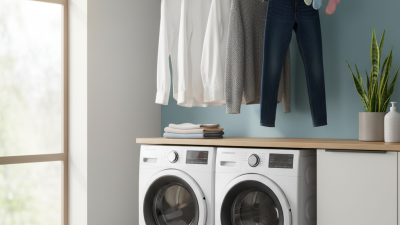
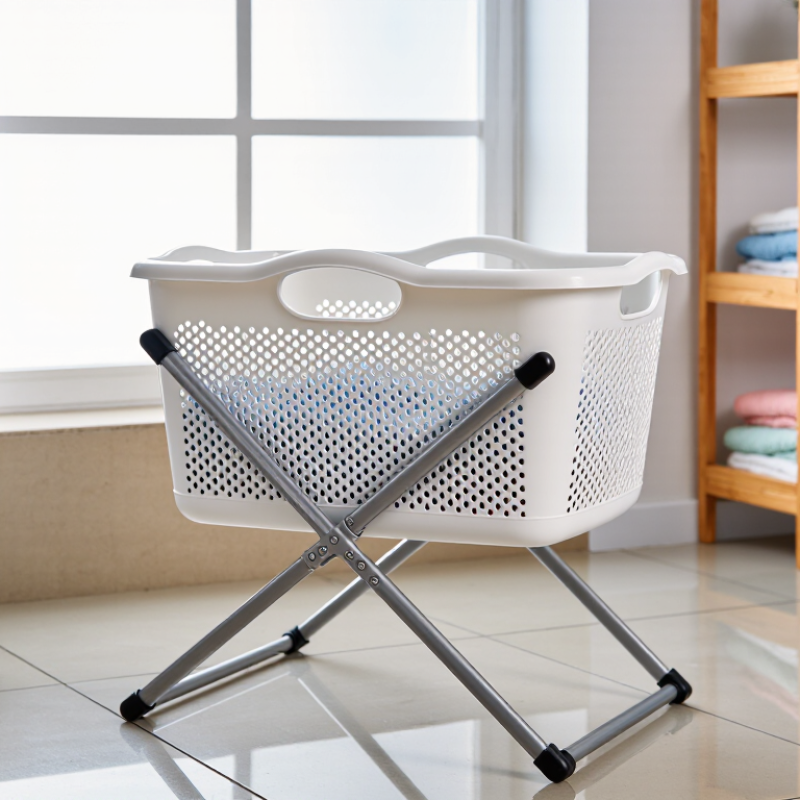
China’s laundry-storage industry is moving toward lighter, smaller, and more adaptable household products. A Laundry Basket With Foldable Legs reflects this shift. It combines a carrying basket with a raised frame, helping users sort clothes beside a washing machine or dry them in a compact room.
The market context is significant. UNEP’s Global Waste Management Outlook 2024 estimates that global municipal solid waste reached about 2.3 billion tonnes in 2023. Household storage products cannot solve this problem alone. However, durable materials, replaceable components, and longer product use can reduce unnecessary replacement. The Ellen MacArthur Foundation also emphasizes designing products for durability, reuse, and repair. These principles matter when evaluating suppliers.
Patric Richardson, laundry expert and author of Laundry Love, has said, “Laundry is a way to show love.” His point sounds simple. Yet it highlights the practical value of well-designed laundry tools. A stable basket with folding legs can reduce bending, improve airflow, and keep clean clothes away from damp floors. In a small apartment, those details become visible every day.
Chinese suppliers now offer PP plastic, aluminum, bamboo, and reinforced fabric structures. Product quality still varies. Some frames wobble under heavy towels, while hinges may weaken after repeated folding. This is where supplier experience becomes essential. Buyers should request load testing, hinge-cycle testing, material declarations, and factory inspection records. A polished sample is not enough. The real question is whether the basket remains reliable after months of ordinary use.
China Top Laundry Basket With Foldable Legs Supplier
Foldable-leg laundry baskets are useful where floor space changes daily. Common types include single-basket, two-tier, and rolling models. A single basket suits bedrooms and small apartments. Two-tier designs separate light and heavy clothing. Rolling versions help users move laundry between rooms.
Typical open dimensions range from 45 × 35 × 70 cm to 60 × 40 × 90 cm. Folded heights may fall below 15 cm, making storage easier. Many models carry rated loads from 20 to 30 kg. However, the rating must describe real testing conditions. Even weight distribution matters. Wet towels can create concentrated pressure. A strong frame can still become unstable on uneven floors.
Tips: Check the open and folded dimensions before ordering. Ask for frame-material details, hinge testing, and load-test records. Confirm whether the rating covers the basket, legs, and wheels together. In practical inspections, users often overlook leg locking strength. That small hinge matters. A higher load rating is not automatically better if the basket flexes or the base spreads. Suppliers should provide clear measurements, sample evaluations, and consistent production checks. Some dimensions may vary slightly after folding, so request physical samples when accuracy is important.

Material selection affects every part of a foldable laundry basket. Polypropylene, or PP, with a density of 0.90–0.91 g/cm³ offers a useful balance between light weight and structural strength. It should resist ordinary moisture, repeated handling, and daily folding without becoming unnecessarily heavy. However, density alone does not prove product quality. A professional supplier should check resin batches, molding temperatures, wall thickness, and hinge performance. Small variations can create large differences in durability.
Safety documentation matters as much as appearance. Suppliers should provide current REACH and RoHS test reports from qualified laboratories, with clear product and material identification. These records help confirm control of restricted substances and support responsible market access. Factory inspections should also examine sharp edges, unstable legs, pinch points, and load-bearing joints. The basket may look simple, but its folding mechanism receives repeated stress near the hinges.
Practical checks are essential. Open and close the legs repeatedly, place a realistic laundry load inside, and inspect deformation afterward. A reliable supplier keeps batch records and checks finished goods before shipment. Certificates are helpful, but they are not the whole answer. One weakness remains: laboratory results may represent tested samples, not every production unit. Regular sampling and honest corrective action make quality control more credible.
A reliable laundry basket begins with controlled injection molding, not attractive packaging. PlasticsEurope’s Plastics – the Fast Facts 2023 reports 400.3 million tonnes of global plastics production in 2022. That scale makes material efficiency important. Our process starts with resin inspection, moisture control, and mold-temperature verification. Small errors can create visible defects.
The basket body usually uses 1–3 mm walls. One millimeter cools quickly and may show short shots. Three millimeters retain heat and can develop sink marks. We adjust filling speed, holding pressure, and cooling time for each zone. Foldable legs need balanced ribs, smooth pivots, and consistent clearance. Otherwise, the basket may wobble after repeated folding. A perfect first shot is rare.
Quality gates cover first-piece approval, dimensional checks, hinge movement, load testing, and visual inspection. We measure wall thickness at corners and around handle openings. We also check flash near the folding joints. OECD’s Global Plastics Outlook states that 353 million tonnes of plastic waste were generated in 2019, while only 9% was recycled. This supports tighter scrap segregation and controlled regrind use. Our weak point is cooling consistency on deep corners. We review it instead of hiding it. Final inspections follow documented sampling plans aligned with ISO 2859-1.
Choosing a China supplier for laundry baskets with foldable legs requires more than comparing photos and prices. ISO 9001 certification offers a documented quality-management framework. The ISO Survey 2022 recorded 1,265,216 ISO 9001 certificates worldwide, showing its broad industrial adoption. However, certification does not guarantee every basket is flawless. Factory evidence still matters.
Request the certificate number, recent audit records, material specifications, and production samples. For incoming inspection, AQL 2.5 under ISO 2859-1 can provide a practical acceptance benchmark. It is not a zero-defect promise. Inspectors should check folding-leg strength, hinge alignment, weld or rivet security, fabric stitching, and basket dimensions. A loaded sample should remain stable on a bathroom floor.
MOQ should match your sales forecast, storage capacity, and packaging plan. A smaller trial order may cost more per unit, but it reduces early inventory risk. Ask whether the MOQ applies per color, size, or total order. Many suppliers quote 15–30-day lead times, yet this usually starts after artwork approval, deposit confirmation, and material availability. Clarify each milestone in writing. McKinsey’s 2023 supply-chain research reported that 95% of surveyed leaders had experienced supply-chain challenges since 2020. Delays remain realistic. Build a buffer. Supplier assessments sometimes ignore carton compression, replacement parts, and inspection timing, which can create avoidable costs.
China Top Laundry Basket With Foldable Legs Supplier
Export readiness begins with evidence, not attractive product photos. A reliable supplier should test cartons through drop, compression, vibration, and moisture exposure. Record the test height, carton weight, stacking time, and final product condition. A folded basket with metal or reinforced plastic legs needs internal protection. Otherwise, leg joints may scratch the basket during ocean transport.
OEM options can include color matching, handle shape, drainage holes, woven patterns, instruction sheets, and carton printing. Confirm every change with a pre-production sample. Small changes can affect the folded size and container loading quantity. This matters.
Ask for carton dimensions, net weight, gross weight, and pallet details before approving a purchase order. Packaging data should come from measured samples, not estimates. I have seen efficient designs lose their cost advantage after oversized cartons reduced loading efficiency. That mistake deserves review.
HS-code data also requires careful verification. Plastic household baskets may be considered under HS heading 3924 in some markets, but material, construction, and local customs rules can change the classification. Metal, textile, or composite baskets may follow different treatment. Request previous declaration references, product material details, and a written classification explanation. These records support customs discussions, but they do not replace an official ruling. A professional supplier should accept that uncertainty and help update documents when regulations or product specifications change.
| Data Dimension | Specification / Requirement | Export-Ready Data | Verification Point |
|---|---|---|---|
| Product Type | Household laundry basket with foldable legs | Collapsible basket designed for laundry collection, carrying, and storage | Confirm final construction, material combination, and intended use before classification |
| Recommended Material | PP or HDPE basket body; powder-coated steel or reinforced plastic legs | Recyclable polypropylene body with corrosion-resistant foldable support structure | Material declaration, supplier specification sheet, and incoming-material inspection |
| Typical Capacity | Approximately 40–60 litres | Suggested standard capacity: 50 litres | Measure usable internal volume by water displacement or a calibrated container |
| Product Dimensions | Approx. 580 × 380 × 650 mm when assembled | Suggested packed-folded size: approximately 580 × 380 × 120 mm | Final dimensions should include handles, feet, hinges, and tolerance of ±5 mm |
| Product Weight | Approx. 1.5–2.5 kg per unit | Target net weight: 1.9 kg per unit | Record actual weight during pre-shipment inspection; tolerance should be agreed in the purchase specification |
| Load Performance | Recommended working load: 10–15 kg | Suggested test load: 15 kg distributed evenly for 1 hour | Check deformation, leg locking, hinge damage, and basket stability after loading |
| Foldable-Leg Safety | Legs must lock securely in the open and closed positions | No accidental collapse during normal carrying or loading | Conduct repeated opening/closing cycles and pinch-point inspection; define the cycle count in the purchase order |
| Surface and Odour Control | Smooth edges, no sharp burrs, no excessive mould marks, and no strong residual odour | Visual inspection under normal lighting plus odour check after unpacking | Use an approved sample and documented defect-classification standard |
| Individual Packaging | Protective polybag or paper sleeve with corner and hinge protection | Folded unit separated from adjacent units to reduce scuffing and impact damage | Packaging must comply with destination-market requirements for plastic materials and labelling |
| Export Carton | Double-wall corrugated carton recommended for export distribution | Suggested packing: 4–8 units per carton, depending on folded dimensions | Confirm carton dimensions, gross weight, pallet pattern, and container utilisation before mass production |
| Packaging Drop Test | ISTA 1A or an equivalent agreed distribution simulation | Test a fully packed carton using the actual export configuration | Inspect carton integrity and product function after drops; the required drop height depends on packaged weight and test protocol |
| Compression Test | ASTM D4577, ASTM D642, or an equivalent agreed carton-compression method | Evaluate stacking resistance under warehouse and transport conditions | Set the load according to carton weight, stacking height, storage duration, and humidity exposure |
| Vibration Test | ISTA distribution test or ASTM D4728 random-vibration method | Check abrasion, hinge displacement, leg movement, and carton loosening | Use the transport mode and route assumptions stated in the test report |
| OEM Colour Options | Custom solid colours or approved colour references | Common options include white, grey, black, beige, blue, and green | Approve a physical colour chip or master sample; colour variation may occur between resin batches |
| OEM Logo and Marking | Debossed, embossed, printed, labelled, or laser-marked identification | Custom carton artwork, care instructions, barcode, country-of-origin marking, and recycling symbol where applicable | Artwork approval and trademark authorisation are required before production |
| OEM Packaging | Retail-ready packaging, e-commerce packaging, or bulk export carton | Options may include colour box, printed sleeve, recycled paper insert, and multilingual instructions | Confirm packaging material, print coverage, barcode format, and destination-market recycling rules |
| Quality Inspection Plan | Pre-production sample, in-line inspection, and final random inspection | Check dimensions, weight, colour, folding action, load stability, packaging, and carton markings | Use an agreed AQL plan and written acceptance criteria; a common general-inspection reference is ISO 2859-1 |
| Primary HS Code | HS 3924.90 | Other household articles and hygienic or toilet articles of plastics; commonly used for a plastic laundry basket | The six-digit HS heading should be confirmed with the importer, customs broker, or destination customs authority |
| Mixed-Material Classification | Plastic basket combined with metal legs or a metal structural frame | Classification may depend on the product's essential character, material predominance, and national tariff rules | Do not use a metal heading automatically; provide customs with product photos, material percentages, function, and technical specifications |
| Customs Documentation | Commercial invoice, packing list, transport document, and applicable origin documentation | Documents should show accurate product description, quantity, net/gross weight, carton count, value, and HS code | Keep the commercial description consistent across invoice, packing list, booking data, and customs entry |
| Shipping Configuration | Container, palletised, or loose-carton export loading | Foldable design reduces storage and freight volume compared with a fixed-height basket | Calculate loading by confirmed folded carton dimensions rather than product dimensions alone |
| Environmental and Regulatory File | Material declaration, packaging declaration, and destination-market compliance review | Maintain resin identification, recycled-content claim evidence where applicable, and packaging material records | Requirements vary by destination; verify chemical, packaging, labelling, and extended-producer-responsibility obligations before shipment |