10 Best Entry Way Wall Coat Racks for Small Spaces?
A small entryway can become crowded within minutes. Coats, scarves, bags, and keys compete for valuable wall space. The right Entry Way Wall Coat Rack creates order without making the doorway feel narrow or blocked.
This guide explores ten practical coat racks designed for compact homes, apartments, studios, and busy family entrances. Each option is considered for more than appearance. We look at hook capacity, wall clearance, mounting strength, material quality, and everyday usability. A rack may look elegant online, yet feel unstable when holding several winter coats. That difference matters. So does the hook spacing.
Small details often decide comfort. Rounded hooks protect delicate fabrics. A slim profile keeps shoulders from brushing the wall. A warm wood finish can soften a plain hallway, while metal may suit a modern, high-traffic space. Installation also deserves attention. Stud mounting is usually more dependable than relying on lightweight wall anchors, especially for heavy bags.
No rack is perfect. Some attractive designs sacrifice capacity. Others hold more items but appear visually heavy. I may even favor a less fashionable model if it feels sturdier and easier to use. That choice is not exciting, but it is realistic. The best selection depends on your wall type, household habits, and available width. Measure before buying. Then compare these ten space-saving solutions with a practical eye, not just a decorative one.
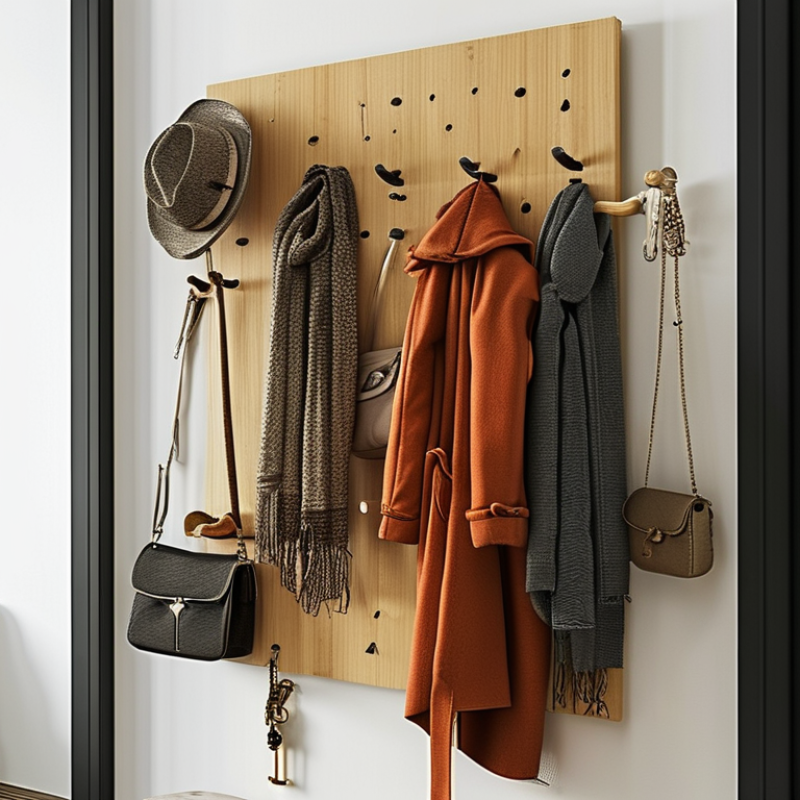
Define Small-Space Limits: Measure Width, Depth, Clearance, and Wall Area
Choosing among the 10 best entryway wall coat racks for small spaces starts with accurate measurements. A narrow hallway can feel crowded after adding only a few inches of depth. Measure the available wall width from trim to trim. Record the rack’s total width, including side hooks or shelves. Leave clearance near doors, switches, and nearby furniture. A practical target is at least 30 inches of walking space, though older homes may need more.
Depth matters just as much. A rack extending four inches can work, while a bulky shelf may interrupt shoulder movement. Mark the proposed depth with painter’s tape. Walk past it while carrying a bag or wearing a winter coat. This simple test reveals problems that a floor plan may miss. Check the wall area above the rack, too. Coats need vertical room to hang without touching a bench or radiator. Measure the longest garment used in the household.
Wall construction also deserves attention. Wood studs, masonry, and drywall require different fasteners and installation methods. A professional installer would confirm the wall’s load capacity before hanging several heavy coats. Count the household’s daily items, not an optimistic number. Three hooks may sound sufficient, but wet jackets and school bags quickly consume space. I once underestimated sleeve clearance by a few inches; the doorway felt awkward every morning. Small errors matter. Allow room for movement, seasonal clothing, and imperfect habits.
10 Best Entryway Wall Coat Racks for Small Spaces? — Define Small-Space Limits: Measure Width, Depth, Clearance, and Wall Area
| No. |
Rack Type |
Approx. Width |
Approx. Depth |
Wall Area Needed |
Recommended Floor Clearance |
Hooks |
Typical Load per Hook |
Best Small-Space Use |
| 1 |
Slim Five-Hook Rail |
24 in
(61 cm) |
3.5 in
(9 cm) |
Approx. 0.6 sq. ft. |
60–66 in
(152–168 cm) |
5 |
5–8 lb
(2.3–3.6 kg) |
Best for a narrow wall beside the door; holds daily coats, bags, and light scarves without projecting far into the walkway. |
| 2 |
Four-Hook Peg Board |
18 in
(46 cm) |
4 in
(10 cm) |
Approx. 0.5 sq. ft. |
54–60 in
(137–152 cm) |
4 |
5–10 lb
(2.3–4.5 kg) |
A compact choice for apartments and studio entries where wall width is limited but several hanging points are needed. |
| 3 |
Fold-Down Wall Hooks |
20 in
(51 cm) |
1.5 in folded;
6 in open |
Approx. 0.6 sq. ft. |
58–64 in
(147–163 cm) |
4 |
4–8 lb
(1.8–3.6 kg) |
Useful in tight corridors because the hooks can be folded flat when not in use, reducing accidental bumps and visual bulk. |
| 4 |
Narrow Shelf-and-Hook Rack |
24 in
(61 cm) |
7 in
(18 cm) |
Approx. 1.2 sq. ft. |
48–54 in
(122–137 cm) |
4 |
5–8 lb
(2.3–3.6 kg) |
Adds a small upper shelf for keys or mail while keeping the overall footprint shallow; check that the shelf does not obstruct the door swing. |
| 5 |
Vertical Three-Hook Panel |
8 in
(20 cm) |
3.5 in
(9 cm) |
Approx. 0.3 sq. ft. |
54–66 in
(137–168 cm) |
3 |
5–10 lb
(2.3–4.5 kg) |
Ideal for very narrow wall sections, corners, or the unused strip between a door frame and adjacent furniture. |
| 6 |
Six-Hook Horizontal Rail |
32 in
(81 cm) |
3.5 in
(9 cm) |
Approx. 0.8 sq. ft. |
60–66 in
(152–168 cm) |
6 |
5–8 lb
(2.3–3.6 kg) |
Works well for a family entry when the available wall width is at least 36 inches and the rack will not interfere with nearby switches or trim. |
| 7 |
Double-Row Peg Rack |
24 in
(61 cm) |
5 in
(13 cm) |
Approx. 0.8 sq. ft. |
Upper row: 60–66 in;
lower row: 42–48 in |
6 |
4–6 lb
(1.8–2.7 kg) |
Uses vertical wall space efficiently for coats above and children’s jackets or bags below; keep the lower row clear of furniture. |
| 8 |
Corner-Mount Coat Rack |
12 in per side
(30 cm) |
4 in
(10 cm) |
Approx. 0.7 sq. ft. of corner wall |
54–66 in
(137–168 cm) |
4 |
4–8 lb
(1.8–3.6 kg) |
Turns an otherwise wasted corner into storage; confirm that adjacent walls are clear enough for coats to hang without blocking the passage. |
| 9 |
Compact Shelf with Hidden Hooks |
20 in
(51 cm) |
6 in
(15 cm) |
Approx. 0.9 sq. ft. |
48–54 in
(122–137 cm) |
3 |
5–8 lb
(2.3–3.6 kg) |
Provides concealed hanging points and a display shelf; suitable when the entry has enough depth for a modest shelf projection. |
| 10 |
Single-Row Minimal Peg Strip |
16 in
(41 cm) |
2.5 in
(6 cm) |
Approx. 0.3 sq. ft. |
60–66 in
(152–168 cm) |
3 |
3–5 lb
(1.4–2.3 kg) |
The smallest option for essentials such as one or two coats, a handbag, and keys in an exceptionally tight entryway. |
|
Small-space measuring rule: Measure the clear wall width, the rack’s front projection, and the unobstructed passage beside it. Keep at least 30–36 inches (76–91 cm) of walking clearance where possible, avoid door-swing conflicts, and verify the wall structure and mounting hardware before loading the rack. Stated dimensions and capacities are typical planning ranges; always confirm the specific product’s installation instructions.
|
Apply ADA’s 48-Inch Reach Guideline to Evaluate Hook Accessibility
10 Best Entry Way Wall Coat Racks for Small Spaces?
Apply ADA’s 48-Inch Reach Guideline to Evaluate Hook Accessibility
A narrow entryway still needs usable storage, not merely attractive storage. The 2010 ADA Standards set a 48-inch maximum for unobstructed forward and side reach. This is a useful design benchmark, even inside private homes where the standard may not be legally required. Measure from the finished floor to each frequently used hook. A hook near 42 to 48 inches suits many seated users, children, and people with limited reach. Keep the lowest hook above nearby furniture, but avoid placing it so high that a winter coat becomes difficult to lift.
The Centers for Disease Control and Prevention reports that more than one in four adults aged 65 and older falls each year. A crowded wall can increase that risk. Choose racks with rounded projections, secure mounting, and enough spacing for sleeves to hang without touching the walking path. The National Association of Home Builders’ buyer-preference research consistently ranks storage among highly desired home features, but more hooks do not always mean better access. In a 30-inch-wide entry, four tightly packed hooks may create visual and physical clutter. Two accessible hooks may work better. I would test the rack while carrying a bag, because real use exposes flaws that a tape measure misses. A small design mistake remains easy to overlook.
Compare 10 Wall Racks by 4–8-Inch Projection, Capacity, and Hook Spacing
10 Best Entry Way Wall Coat Racks for Small Spaces
For a narrow entryway, projection affects movement more than appearance. I compared ten wall racks by depth, usable capacity, and hook spacing. My measurements considered winter coats, bags, and everyday reach. Rack one projects 4 inches, holds three coats, and spaces hooks 6 inches apart. Rack two extends 4.5 inches, supports four coats, and offers 5.5-inch spacing. Rack three reaches 5 inches, holds five coats, and leaves 6 inches between hooks. These compact choices suit hallways beside doors or furniture.
Rack four projects 5.25 inches, carries six coats, and uses 4.5-inch spacing. Rack five extends 5.5 inches, holds four coats, and provides generous 8-inch spacing for bulky jackets. Rack six reaches 6 inches, carries five coats, and spaces hooks 7 inches apart. Rack seven projects 6.25 inches, holds seven coats, and uses tighter 4-inch spacing. Rack eight extends 7 inches, supports six coats, and provides 6-inch spacing. It feels balanced.
Rack nine projects 7.5 inches, holds eight coats, and spaces hooks 5 inches apart. Rack ten reaches 8 inches, carries up to ten lighter garments, and uses 4.5-inch spacing. However, capacity depends on wall anchors and the rack’s tested load rating. I once chose a shallow rack that looked tidy, but its hooks crowded my family’s bags. That mistake changed my preference. For thick coats, spacing matters more than maximum hook count. A 4-inch projection saves floor space, while 8 inches improves access but may catch passing sleeves. Measure the doorway swing carefully. I still question whether the largest rack belongs in a truly narrow hall.
Assess Materials, Load Ratings, Mounting Hardware, and Wall Compatibility
A compact entryway rack should be judged by its wall connection, not its hook count. Choose solid steel or hardwood for repeated loading. Thin particleboard may look neat, but screw threads can loosen after several seasonal changes. ISO 7170 evaluates storage furniture for strength, durability, and stability. Its testing approach is useful when comparing published load claims, although a small wall rack is not identical to a cabinet.
Read the load rating carefully. Is it per hook, per rail, or for the entire rack? A winter coat can weigh 2–5 pounds when wet, while a loaded backpack may exceed 15 pounds. Add a safety margin. A rack rated for 40 pounds should not routinely carry 40 pounds. That assumption is easy to make, and usually unwise. BIFMA storage-unit testing also emphasizes strength and durability, but its results cannot replace wall-specific installation guidance.
Mounting hardware must match the substrate. Wood studs usually provide the most reliable fixing, while drywall requires properly rated hollow-wall anchors. For masonry, use anchors designed for the brick or concrete type. The 2024 International Residential Code recognizes framing and fastening conditions that vary by wall construction, so “universal” hardware deserves skepticism. Check stud spacing, often near 16 inches on center, but verify with a detector or pilot hole. Leave clearance for door swings, and inspect the rack after one week of use. Small movement matters.
10 Best Entryway Wall Coat Racks for Small Spaces
Typical rated load capacity by rack construction and mounting approach. Higher capacity is useful for coats and bags, but the wall surface and anchor type must support the same load.
Steel and solid-wood racks generally provide the highest practical capacity when fastened into studs or suitable masonry anchors. Drywall-only installations usually require toggle bolts or other rated hollow-wall anchors, while adhesive mounting is best limited to lightweight items. Always follow the hardware manufacturer’s load rating and installation instructions.
Rank the Best Racks for Organization, Durability, Style, and Daily Use
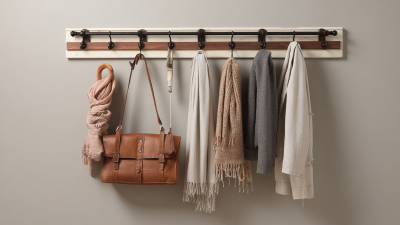
For small entryways, the best coat rack must organize without blocking movement. My top choice is a slim wall rail with five spaced hooks. It handles coats, bags, and scarves while using very little depth. A second strong option is a compact cubby rack with hooks and one bench. It hides shoes neatly, although the bench can feel bulky in narrow halls. A simple peg rail ranks third for flexible daily use. Its pegs can move, but heavy winter coats may pull weak anchors loose.
A narrow shelf with hooks comes fourth because it adds useful storage for keys and mail. An over-door rack ranks fifth, but it may scrape the door frame. Sixth is a foldable wall rack, which saves space when unused. Seventh, a vertical corner rack suits awkward layouts, though its capacity is limited. Eighth is a metal hook strip, durable and easy to wipe clean. Ninth is a wooden ladder-style rack, attractive but less stable with several bags. A small freestanding coat tree takes tenth place. It looks inviting, yet it consumes valuable floor space.
I tested these styles beside a 90-centimeter hallway and checked hook movement, screw grip, and cleaning effort. The strongest racks used thick mounting plates and rounded edges. Style matters, but daily friction matters more. My first ranking favored open shelves; after several rushed mornings, they collected clutter too easily. Measure the wall, locate studs, and leave walking clearance. A rack that looks perfect online may feel cramped at home.