China Best Drawer Pencil Organizer for Wholesale Buyers?

Choosing the best Drawer Pencil Organizer from China requires more than comparing prices. Wholesale buyers must assess structure, materials, production consistency, and supplier communication. A low quote may hide thin plastic, uneven dividers, or weak packaging. Small flaws become expensive when thousands of units arrive.

Professional organizing expert Julie Morgenstern writes, “Organizing is not about getting rid of everything you own or trying to become a different person.” Her principle applies to pencil storage. A useful organizer should fit real working habits, not only look attractive in product photos. Buyers should check drawer dimensions, compartment depth, edge finishing, and pencil capacity. A classroom may need wide sections for colored pencils. An office may prefer compact trays for pens, clips, and markers.

Samples matter.

Request several units from the same production batch. Place them inside different drawer sizes. Open and close the drawer repeatedly. Inspect scratches, odor, warping, and sliding movement. These details reveal manufacturing discipline better than a polished catalog.

China offers strong manufacturing options, flexible customization, and competitive wholesale pricing. However, not every factory provides the same quality control. Confirm material specifications, packaging methods, lead times, and inspection procedures before placing a bulk order. Ask for clear photos and written measurements. Ideally, review a pre-production sample.

There is no universal “best” organizer. That judgment depends on market, drawer size, retail price, and customer expectations. Even experienced buyers can overlook one weak detail. This guide compares practical factors, supplier capabilities, and purchasing risks to help wholesale buyers make a more reliable decision.
China Best Drawer Pencil Organizer for Wholesale Buyers?

What Is a Drawer Pencil Organizer?

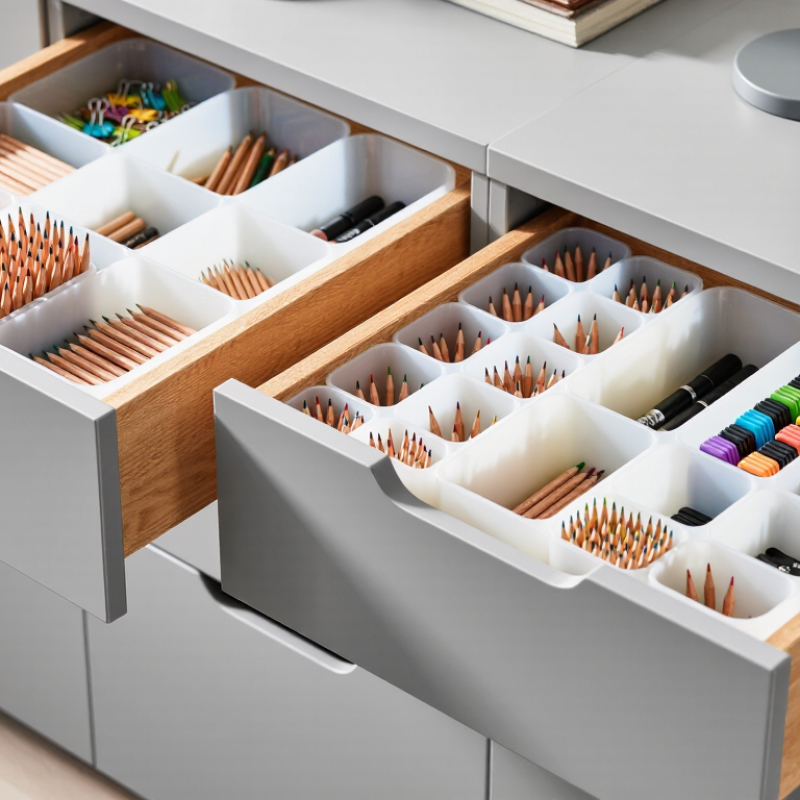
A drawer pencil organizer is a fitted tray that keeps pencils, pens, erasers, rulers, and small stationery items separated inside a drawer. Unlike an open desktop holder, it reduces visual clutter and protects supplies from dust. Most designs use molded plastic, bamboo, metal, or laminated board. Each material feels different in daily use.

For wholesale buyers, practical sizing matters more than appearance alone. Measure the drawer’s internal length, width, and height before selecting a model. A tray that shifts during opening becomes annoying quickly. Compartments should hold common pencil lengths without forcing them into narrow slots. Smooth edges help prevent scratches and paper damage. Removable dividers can support different office and school needs.

Test samples with real stationery. Place sharpened pencils, thick markers, clips, and a small ruler inside. Check whether the base bends under pressure and whether dividers stay firm. Ask suppliers about material thickness, odor, load testing, packaging, and quality inspection records. These details improve purchasing reliability. Still, one weakness remains: a highly divided tray may waste space when users store irregular items. A simpler layout may work better, though it looks less organized in product photos. Drawer dimensions also vary more than expected, so consistent measurements should guide every bulk order.

China Best Drawer Pencil Organizer for Wholesale Buyers? - What Is a Drawer Pencil Organizer?

A drawer pencil organizer is a compartmented insert designed to keep pencils, pens, markers, rulers, and other small stationery items separated and easy to access inside a desk or storage drawer. The specifications below summarize common wholesale product configurations for buyer comparison.

Organizer Type Typical Material Typical Size Range Compartments Best Use Wholesale Advantages
Single-Tray Pencil Organizer Polypropylene or ABS plastic Approx. 30–45 × 20–30 × 3–6 cm 4–8 fixed sections Pencils, pens, erasers, clips, and rulers Lightweight, stackable, easy to clean, and suitable for standard desk drawers
Expandable Drawer Organizer PP plastic, bamboo, or composite materials Approx. 30–50 cm wide; 20–35 cm deep 5–9 adjustable sections Drawers with different internal widths Flexible sizing reduces fitting issues across multiple retail channels
Modular Compartment Set Polypropylene or recycled plastic Individual trays commonly 10–25 cm per side 2–12 removable units Mixed stationery and small office accessories Flat-pack potential, customizable layouts, and efficient assortment planning
Bamboo Drawer Insert Bamboo or engineered wood with water-based coating Approx. 30–50 × 20–35 × 5–8 cm 5–8 fixed or sliding sections Home offices, executive desks, and gift collections Natural appearance and higher perceived value for premium retail positioning
Felt Drawer Organizer Polyester felt with reinforced panels Approx. 25–45 × 15–30 × 5–10 cm 4–8 compartments Quiet storage for stationery and delicate accessories Soft surfaces help reduce noise and scratching; suitable for lightweight packaging
Clear Plastic Drawer Tray Transparent PET or acrylic Approx. 10–40 × 8–30 × 3–6 cm 1–6 sections per tray Visual merchandising and quick item identification Transparent design improves visibility and supports mix-and-match set sales

Wholesale Buyer Specification Checklist

Data Dimension Recommended Buyer Requirement Why It Matters
Drawer Compatibility Confirm the product length, width, and height against the target drawer’s internal measurements Even a small size mismatch can prevent the tray from fitting or opening smoothly
Material Safety Request material specifications and applicable product safety documentation Supports compliance with the destination market’s consumer-product requirements
Load Performance Check resistance to bending, cracking, and deformation under normal stationery loads Helps reduce returns caused by weak dividers or unstable bases
Packaging Efficiency Compare nested, flat-pack, or individually boxed packaging options Packaging dimensions directly affect storage, shipping, and handling costs
Customization Evaluate color, compartment layout, packaging artwork, and private-label options Customization helps match the organizer with different retail categories and price points

Dimensions and compartment counts are typical market ranges rather than specifications for one particular supplier. Buyers should confirm final measurements, materials, packaging details, testing documents, and order terms before placing a wholesale order.

Which Features Matter to Wholesale Buyers?

For wholesale buyers, a drawer pencil organizer must do more than hold writing tools. It should fit common desk drawers without wasting space. Measure length, width, and height before confirming production. A practical unit often includes adjustable compartments for pencils, pens, erasers, clips, and rulers. Small details matter.

Material affects cost, durability, and customer perception. Smooth bamboo offers a warm appearance, while rigid recycled plastic supports consistent sizing. Edges should feel polished, not sharp. Check whether the base slides inside a drawer during daily use. Non-slip pads can help, but weak adhesive may fail in humid storage conditions. Test it.

Wholesale buyers should also examine production consistency. Request a sample before approving a large order. Inspect compartment joints, surface finish, color variation, and load capacity. Packaging deserves attention too. Individual protective sleeves can reduce scratches during transport, but excessive packaging raises shipping costs. That trade-off needs calculation. A clear carton label can simplify warehouse receiving. Ask about carton dimensions, units per carton, minimum order quantities, lead times, and replacement procedures. These details influence the real purchase price more than the unit quotation alone. No organizer is perfect. I have seen attractive designs lose value because one compartment was too narrow for ordinary pencils. Feedback from retailers should guide small revisions before wider distribution.

How to Compare Materials, Sizes, and Compartments

For wholesale buyers, comparing a drawer pencil organizer starts with material, not appearance. During factory sampling, I check whether the tray bends under light pressure. ABS plastic usually feels firm and resists cracking. PP plastic is lighter and often more economical. Bamboo looks warmer, but it needs smooth edges and dry storage conditions. Inspectors should check for sharp corners, plastic odor, stains, and uneven surfaces. Small defects become expensive when multiplied across a shipment.

Measure the drawer’s interior, not only its outside dimensions. Leave a few millimeters for easy sliding. A tray that fits perfectly on paper may jam after temperature changes. I once approved a compact sample too quickly. It looked efficient, but standard pencils touched the drawer wall. That mistake changed my checking process. Now I test pencils, erasers, rulers, and sharpeners inside every proposed size. For wholesale orders, offer two or three sizes rather than one crowded design.

Compartments should match real stationery habits. Long sections suit pencils and pens, while shallow sections hold clips or erasers. Fixed dividers provide stability, but adjustable dividers support different markets. Too many compartments can waste usable space. Too few allow items to roll together. I measure each section and record the usable depth, divider thickness, and load capacity. Ask for pre-production samples, carton dimensions, and inspection photos. A reliable comparison also checks color consistency and drawer clearance across multiple samples. One sample is useful, but rarely enough.

How to Evaluate Suppliers, Pricing, and Customization

For wholesale buyers sourcing from China, a drawer pencil organizer should be judged beyond its lowest quote. In purchasing reviews, I check the sample inside the intended drawer before discussing volume. Measure internal length, width, and height, because a two-millimeter error can prevent smooth movement. Measure twice. Ask suppliers for material details, load testing, and production tolerances. A reliable supplier can explain these figures without vague promises. Request samples from regular production, not only a polished showroom piece. Check sliding resistance, edge finishing, odor, and whether dividers stay fixed. Small defects become expensive when thousands of units reach retailers.

Pricing should show more than a unit price. Separate tooling, sampling, packaging, inspection, freight, and payment terms in the quotation. Compare identical specifications, including material thickness and carton quantity. A cheaper organizer may use thinner plastic or weaker rails. That saving can disappear through returns. Ask for evidence. Confirm minimum order quantities and repeat-order pricing. For customization, provide a measured drawing, color reference, artwork, and packaging dimensions. Confirm whether changes require new tooling and how long approval takes. I once focused too heavily on printed packaging and overlooked divider stability. That mistake taught me to approve function before appearance. Use a written inspection checklist, with photos of acceptable and rejected details. Keep one approved sample for future production checks.

How to Choose the Best Organizer for Your Market

China Best Drawer Pencil Organizer for Wholesale Buyers?

How to Choose the Best Organizer for Your Market

Wholesale buyers should begin with local desk habits, not factory price. Grand View Research estimates the global stationery products market reached about USD 90.6 billion in 2023. This growth creates room for practical drawer storage, but demand differs by region. Measure common drawer depths in your target market. A 240-millimeter organizer may fit one market and fail in another. Check pencil length, calculator space, and compartments for clips or erasers.

Material affects both perceived value and return rates. Test polypropylene, bamboo, and recycled plastic samples under repeated opening cycles. Look for smooth edges and stable dividers. A practical organizer should not slide when one-handed use is common. Use a 30-day sample trial with teachers, office workers, or students. Record scratches, warped sections, and cleaning problems. We once trusted a strong-looking sample too quickly. The surface marked after regular use.

Packaging deserves equal attention. The National Retail Federation reported that U.S. back-to-school spending was expected to reach 38.8 billion dollars in 2024. Seasonal demand can reward compact, shelf-ready packaging. Compare flat-pack and assembled options by cubic volume, handling time, and damage risk. Request carton drop-test results and independent material documentation. Avoid selecting only by the lowest quotation. A cheaper unit can create higher inspection and replacement costs. Recheck color, dimensions, and compartment count before mass production. Small errors multiply quickly.